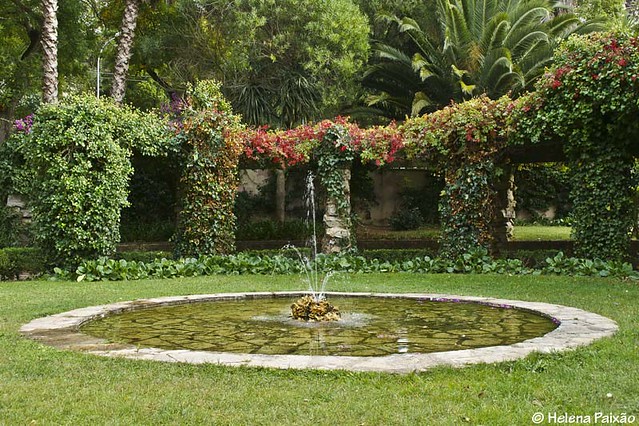
I’ve noticed many people still read this blog, from all over the world.
I am sorry to say I have no more time to manage it.
Unfortunately, I’ve become “old” and I am busy doing “adult stuff”, but luckily, thanks to my job, I still travel and, if I can, I will update my travel diary 🙂
I am glad my reviews are useful to internet users, maybe one day I will come back, but, right now, it’s not possible.
I went to Penha once, in 2013.
There are many places called “Penha” in Portugal and so there are in Brazil.
Anyway, this is what I saw there: a beautiful peaceful place in the nature.
Penha (Amarante), July 2013
Penha (Amarante), July 2013
Penha (Amarante), July 2013
Penha (Amarante), July 2013
There are some places I couldn’t photograph because I had to be careful while walking.
It’s a shame I couldn’t return there. If I ever come back to Portugal to visit my friends from Amarante, I hope I can visit this beautiful place again 🙂
I am trying hard to write a nice and useful article about Lisbon, but it’s taking so long to put all the memories together. Today I suddenly thought about one of the most beautiful places I’ve ever seen in Portugal and I really want to write something about it: Serra do Marão.
It’s a mountain place between two regions in the North: Douro Litoral and Trás os Montes e Alto Douro.
I went there on June 2013 and on June 2014 and it was enchanting both times. The first time, I spent the night until the sunrise, while the second time I went there in the afternoon and it was a very nice experience. I saw a lot of cows and nice flowers all around.
“I think we are well advised to keep on nodding terms with the people we used to be, whether we find them attractive company or not. Otherwise they turn up unannounced and surprise us, come hammering on the mind’s door at 4 a.m. of a bad night and demand to know who deserted them, who betrayed them, who is going to make amends. We forget all too soon the things we thought we could never forget. We forget the loves and the betrayals alike, forget what we whispered and what we screamed, forget who we were. I have already lost touch with a couple of people I used to be; one of them, a seventeen-year-old, presents little threat […] The other one, a twenty-three-year-old, bothers me more. She was always a good deal of trouble, and I suspect she will reappear when I least want to see her, skirts too long, shy to the point of aggravation, always the injured party, full of recriminations and little hurts and stories I do not want to hear again, at once saddening me and angering me with her vulnerability and ignorance, an apparition all the more insistent for being so long banished.
It is a good idea, then, to keep in touch, and I suppose that keeping in touch is what notebooks are all about.”
Lisbon, theCapitalof Portugal.
Or, as I prefer to write: the capitalof Portugal.
Lisbon is one of those cities that you love or hate.
I hate it.
If you don’t agree with me, close your browser and wait for the next post: I will write a new article about Lisbon, from a tourist point of view.
If you’ve already been to Lisbon and you agree with me, go on reading.
If you’ve never been to Lisbon, read my article and be prepared to know the truth about the most “wannabe fancy”, “wannabe trendy”, “wannabe friendly”, “wannabe Capital” of Portugal.
I think I have a problem with Capitals. I stayed 3 days in Rome and I wanted to run away. I didn’t like Rome, because, beyond its stunning beauty, it was chaotic and confusing and disorganized and inhabited by Italian people speaking with a bothering accent.
Lisbon made me feel the same, for the same reasons: very beautiful city, though very disorganized, chaotic and confusing and inhabited by Portuguse people speaking with a bothering accent.
In my opinion, Lisbon is a “wannabe Capital” not only because it is not efficient at all, but also because of the behaviour of the people who live there. I don’t want to act like a “tripeira” from Italy (as I wrote here, the “tripeiros” are the people from the North of Portugal who hate the ones from the South, and who also call them “alfacinhas” and consider them underdeveloped), but I agree with the Northern’s belief.
There is something wrong in Lisbon and I still can’t understand what.
Or maybe I do.
Just a simple example of the efficiency of Lisbon. September 2014, Baixa Chiado metro station. 17:40 minutes to wait for the next train.
THE SOCIAL MASK
“All the world’s a stage” as William Shakespear wrote. Life is a pièce de théâtre.
Lately, in 1959, the Sociologist Erving Goffman wrote “The presentation of self in everyday life” in which he described the theatrical performances that occur in face-to-face interactions. He stated that when an individual comes in contact with another person, he attempts to control or guide the impression that the other person will form of him by altering his own setting, appearance and manner. At the same time, the person that the individual is interacting with attempts to form an impression of, and obtain information about, the individual.
Goffman also believes that participants in social interactions engage in certain practices to avoid embarrassing themselves or others.
As Goffman wrote, society is not homogeneous: we must act differently in different settings. This recognition led Goffman to his dramaturgical analysis. He saw a connection between the kinds of “acts” that people put on in their daily lives and theatrical performances. In a social interaction, as in a theatrical performance, there is an onstage area where actors (individuals) appear before the audience; this is where positive self-concepts and desired impressions are offered. But there is, as well, a backstage: a hidden, private area where individuals can be themselves and drop their societal roles and identities.
Considering Lisbon from a Goffmanian perspective, that city is a theatre where the life onstage takes place. The difference between the theatrical performances and the backstage na vida dos Lisboetas (that in Portuguese means: in the life of the people from Lisbon) is extreme. Unfortunately, what I noticed is that, in Lisbon, people like to be friendly and helpful. When you meet them for the first time, they are social, open-minded, always there for you…but that’s because they are onstage! The truth is just the opposite: they are egoist, self-centered, closed-minded and, if you have a problem with them, they don’t have to change anything because you automatically become their main problem to be solved. Funny, indeed.
My reflection on the society of the Region of Lisbon is due to a lot of persons I met during a one-year stay for my EVS project and I was really disappointed to notice that it was not a lack of luck that made me meet only bad persons: I was just facing the harsh reality of a cold city that likes to shine under Christmas lights, under the sun, under the artificial lights set to manage its cultural agenda.
Lisbon doesn’t shine by itself. Lisbon needs to shine under an external light because, deep inside, it’s dark and empty.
But, of course, that’s just my humble opinion.
Song: Lisboa não é a cidade perfeita
Band: Deolinda
Album: Canção ao lado
Year: 2008
Ainda bem que Lisboa não é a cidade perfeita p’ra nós. Ainda bem que há um beco qualquer que dá eco a quem nunca tem voz. ‘Inda agora vi a louca sozinha a cantar, do alto daquela janela. Há noites em que a saudade me deixa a pensar: Um dia juntar-me a ela. Um dia cantar… como ela.
Luckily Lisbon is not The perfect city for us. Luckily there is an alley Echoing who has never had a voice. I’ve just seen the crazy woman, alone, singing At that window up there. There are nights during which saudade makes me think: One day, I will join her. One day, I will sing… Like her.
I am writing this post to share a just ended experience in Newcastle-upon-Tyne and Whitley Bay (cities I will soon write about): a Training for Trainers, founded by the European Commission thanks to the Erasmus+ programme and managed by the British no-profit organization OpportUNITY.
I am now working as a European Project Manager for Cooperativa Rinascita, an Italian no-profit Co-operative Society operating in the Human Rights field and, right after a month I came back Italy from my EVS experience in Portugal, I had the chance to go to the UK to participate to a Training Course for Trainers in the Non-formal Education field, managed by a partner of the Co-operative (that’s OpportUNITY, of course). I am very happy of this job opportunity I had, since I am going to work with my Leonardo internship colleague and roommate in Casa da Juventude de Amarante, who also gave me the chance to get to know the Co-operative managers and to start working with them.
First and foremost, if you ever read or get to know about a Training Course managed by OpportUNITY, please apply. In my opinion, it’s one of the best organizations ever. The quality of the training was very high, everything was perfect and the Trainers (Mohammed Ahmed, who’s also the manager of OpportUNITY, and Dragan Atanasov) are awesome people, both from a professional and a human point of view. I also think they can be considered the funniest persons I could possibily ever meet in my life. Knowing them should be mandatory for your moments of fun and happiness.
The TC took place in the Rex Hotel in Whitley Bay from the 25th of October until th 3rd of November and it was very intense. We worked hard every single day, but we also had a lot of fun and I personally learned a lot, since I had the chance to improve my skills in the NFE field, practicing every day with team work activities and simulations. The topics of the training were:
How to become a trainer in the NFE field for European Projects
Non-formal, informal, formal education: differences and methods
Communication
Public Speaking
Conflict Management
Skills development
Erasmus+ projects draft ideas and partnership building
As Italian Team for Cooperativa Rinascita, we had two ideas we want to develop and apply for on the next deadline. It was a very productive and rewarding experience. The general atmosphere was unique, I met almost 40 persons from very different countries (UK, Macedonia, Romania, Turkey, Spain, Croatia, Greece, Poland, Bulgaria) and we managed to build a strong group and work well together.
During the (very few) free time, I had the chance to visit Whitley Bay, that’s a very nice town on the North-East coast, and the magic Newcastle-upon-Tyne. I will soon write about them.
I didn’t have much time for myself, but when I had, generally after breakfast, I walked by the sea listening to the British band Cousteau, whose music was perfect for the landscape. I will always remember this TC with the amazing soundtrack of Cousteau’s first album, most of all with one song that really fitted my state of mind and soul and the environment of the cold UK northern seaside: “Last good day of the year“.
Song: Last good day of the year
Band: Cousteau
Album: Cousteau
Year: 1999
All the leaves are turning Autumn’s fingers burnished Furnished here in hope and in faith in the meantime Kinda working my way through a dream I was having alone
There’s something there Amongst the fallen fruit and flowers Won’t rest Only minutes, only hours Unless Now the morning breaks in showers I’m left With the north wind breathing down my neck On the last good day of the year
Porto is definitely one of the two Portuguese cities I would like to live and work in – the other one is Coimbra:).
Porto is big, but not so big. It’s a city, but there are trees, a natural park and the river called Rio Douro, which divides Porto and Vila Nova de Gaia.
It’s always crowded and multicultural, happily grey, shiny under the rain.
The people from Porto are usually kind and friendly, the youngsters like to laugh and drink beer (Superbock! ♥) with their friends, hang out together and…swear. It’s amazing! As I’ve already written (here), the Northern Portuguese people swear a lot and they insult each other with no apparent reason, just because. They can call their best friend “son of a b*itch” and he would just not care. He would laugh and answer with some other bad word, because of reasons. It’s so funny!
A bottle of my favourite Portuguese beer: Super Bock. This is the small bottle (250 ml), called “Super Bock mini”. It costs between 50 cents and 1 €, depending on the bar/pub where you buy it.
As I’ve written here, Porto is the city giving name to the whole Country.
Portugal’s name derives from the Roman name Portus Cale, which was a settlement located at the mouth of the Douro River, now corresponding to the city of Porto.
THE BRIDGES CONNECTING THE TWO CITIES: Dona Maria & Dom Luís I.
The Dom Luís I Bridge (Ponte Dom Luís I in Portuguese) is a metal arch bridge that spans the Douro River between the cities of Porto and Vila Nova de Gaia. At the time of construction its span of 172 m was the longest of its type in the world.
Previously, the Maria Pia bridge (Ponte Maria Pia), commonly known as Ponte Dona Maria, was built in 1877 by Gustave Eiffel. The government held a competition for the construction of a metallic bridge over the Douro River on a site that was adjacent to an existing bridge that it would replace. Téophile Seyrig had engineered the Dona Maria Pia Bridge project nearby, whilst working as a partner of Gustave Eiffel. He now took sole responsibility for the new, major Luís I Bridge. The construction was begun in 1881 and the bridge opened on 31 October 1886.
The Dom Luís I Bridge in the night. Picture taken on June the 23rd 2013, during the Big Party of Porto, “A festa de São João”.
23rd JUNE: A FESTA DE SÃO JOÃO DO PORTO
The Party of Saint John the Baptist in Porto, happening every year during the night between the 23rd and the 24th of June, is one of the biggest Parties I’ve ever gone. It starts in the afternoon, the city is crowded by people walking around the streets with soft plastic hammers, garlic flowers or lemongrass and verbena branches, using them to hit each other’s head. The plastic hammers were introduced as a “weapon” during the 70s having the same function as the garlic flowers. But why do people hit each other’s head?
As the amazing “São Gonçalo cookie” in Amarante is meant to bring you “love and sex”, it looks like the North of Portugal has a lot of traditions related to religion and fertility. Men use the garlic flowersto hit the women on the head as aphallic symbol of the masculine fertility, while the branches of lemongrass or verbena are used by women to hit the men on the head as a symbol of the feminine public hair.
The traditional attractions of the night are street concerts, popular dancing parties, eating barbecued sardines and meat (the choriço assado is great), drinking wine and releasing illuminated flame-propelled balloons over Porto’s summer sky. Fireworks at midnight are a great attraction, the show is usually synchronized with music. In 2013, for instance, the fireworks were synchronized with “Skyfall” by Adele during the last part of the show.
São João do Porto 2013 – People in Vila Nova de Gaia
BUILDING OF THE LIBRARY LELLO & BROS. The Sociedade José Pinto Sousa Lello & Irmão was founded in 1881 and lately renamed Livraria Lello & Irmão in 1919. The building, built in 1906 in Neo-Gothic style, was designed by the Engineer Xavier Esteves. Inside the Library, the wood-looking decoration in painted chalk and the stairs leading to the first floor deserve special attention (the last feature being one of the first reinforced concrete constructions in Porto), as well as the big glass window on the roof, showing the monogram and the motto of the Library, “Decus in Labore” (“In the honor of labor”).
You can take pictures in the Library only on Saturdays between 9 AM and 10 AM. I went there on a Saturday afternoon and I couldn’t photograph anything and it’s a pity, because the Library is really beautiful. I chose some photos I found on the web.
Livraria Lello & Irmão 1
Livraria Lello & Irmão 2
Livraria Lello & Irmão 3
Livraria Lello & Irmão 4
Livraria Lello & Irmão 5
Livraria Lello & Irmão 10
Livraria Lello & Irmão 9
Livraria Lello & Irmão 8
Livraria Lello & Irmão 7
Livraria Lello & Irmão 6
WAS HARRY POTTER REALLY FILMED IN THE LIBRARY?
There are some information on internet stating that some scenes from “Harry Potter and the Chamber of Secrets“ were filmed in there. Someone in Porto thinks the same thing, but that’s not the truth. The books telling the story of the Library never say anything about that. The truth is that J.K. Rowling lived in Porto during some years of her life, working in a school, teaching English as a foreign language. She also married a Portuguese man, who’s the father of her first daughter. The Library Lello & Irmão inspired her while writing Harry Potter, as well as the typical uniform wore by the University students was an inspiration for the uniform used by the students of Hogwarts in the movies. The following scene from “Harry Potter and the Chamber of Secrets” (subtitled in Spanish) was filmed on a set inspired by Livraria Lello & Irmão, but it was not filmed in the Library.
SOMETHING YOU MUST EAT: FRANCESINHA
Francesinha
Francesinha (meaning Little Frenchie) is a Portuguese sandwich originally from Porto, made with bread, wet-cured ham, linguiça, fresh sausage like chipolata, steak or roast meat and covered with melted cheese and a hot thick tomato and beer sauce served with french fries. You can sometimes find an egg on top of it.
It is said that the Francesinha was invented in the 1960s. Daniel da Silva, a returned emigrant from France and Belgium, tried to adapt the croque-monsieur to Portuguese taste. Other versions date the Francesinha to the 19th century.
SOMETHING YOU MUST DRINK: VINHO DO PORTO (Port Wine)
Along the riverside (called “ribeira”), between Porto and Vila Nova de Gaia, there are a lot of wine factories you can enter and visit, enjoying the tour with a tour guide speaking your language, experiencing the visit with a wine tasting included.
Sandeman Factory, one of the Port Wine factories along the riverside in Porto – image found on http://www.wineanorak.com
The “Vinho do Porto” is a sweet red wine, often served as a dessert wine though it also comes in dry, semi-dry, and white varieties. Saying the name in Portuguese (or Italian), you can think this is “the wine of the city of Porto“, but it’s not so: in English, it is translated as “Port Wine“, meaning that it’s a wine produced near a harbor.
The last time I went to Porto, I spent more than one hour in Jardim do Palácio de Cristal, the natural park, taking pictures of birds and trees. It is a very nice place, I would have spent more time there, but I had to catch the bus to come back to Lisbon. 😦
SOME RANDOM PICTURES OF PORTO
There is a lot to see in Porto and Vila Nova de Gaia, so many things to visit and to be enchanted by, it is one of the most beautiful cities of Portugal I’ve visited, not only because of the sight seen but also because of the people. The general environment is perfect.
I am really in love with the North of Portugal, it changed my life and gave me the chance to dream again. I will always be thankful to this beautiful land.
Wandering in Porto, September 2014
Wandering in Porto, August 2013
Wandering in Porto, August 2013
Wandering in Porto, August 2013
Wandering in Porto, August 2013
Wandering in Porto, June 2013
Wandering in Porto, June 2013
Wandering in Porto, June 2013
Wandering in Porto, June 2013
Wandering in Porto, June 2013
Wandering in Porto – September 2014
Wandering in Porto, April 2014
Wandering in Vila Nova de Gaia, Picture of Porto, April 2014
Oeiras is also a “concelho”, it means that it’s the main city of an Urban Area in the district of Lisbon. Even if Oeiras is very big, there is almost nothing to do there: just a few bars that close early, a sad old shopping centre called “Palmeiras”, whose name derives from the street I lived in (Rua das Palmeiras), an irish pub in front of the train station where nobody ever goes because it’s too expensive.
Nothing to do, if you don’t have a car.
The historic centre isn’t nice, it’s not even really that “historic” and the only interesting architectural features are the Municipality and a Church. There are some chinese shops and some restaurants, but people don’t usually go out there by night.
Every time I spoke with my friends and flat mates about Oeiras, we used to call it Raccoon City or Silent Hill.
A very good thing about Oeiras is the atmosphere gave by the citizens: even though it looks like you are going to meet zombies who will eat your brain without mercy, you can feel safe 24/7.
Oeiras is a rich residencial city, with very nice houses and very expensive cars all round. You don’t have to be scared if you want to go out alone in the night, even if the streets are not well lighted: nobody will harm you. You can forget your bag open, nobody will steal your wallet, because you can only meet very rich persons who don’t need your money since they have their Maserati and their Mercedes and BMW and their big fancy houses with a garden and, at least, two huge watchdogs. Who cares about your poor wallet?
The only place of Oeiras I liked is the Garden, called Jardim Municipal de Oeiras. It was just 1.5 km far from the house I lived in and I used to go there when I wanted to be surrounded by trees and ducks.
If you have a car or if you want to catch the Vimeca bus 111, you can go to Oeiras Parque (http://www.oeirasparque.com). It’s a quite big shopping centre with a cinema on the first floor, open everyday from 9 am to 11 pm. Anyway, it’s too far from the residencial part of the city to go there by feet. I did it a couple of times, but it took almost one hour to arrive and one hour to go back home.
Oeiras itself has nothing to do with tourism and it’s not a Portuguese city you should visit. If you are rich, if you have a car and if you have to work in the Region of Lisbon, it’s a very nice place to live in. If you are an EVS and you don’t have a car and you have to volunteer somewhere else in the Region of Lisbon, please stay out of Oeiras.
The transport system in the South of Portugal is crazy. I had to catch a train and a bus to reach my EVS Hosting Organization but, unfortunately, trains and buses are not connected. I got crazy. And I also got a bronchitis, because I had to walk 1.7 km every day to catch the train and then I had to wait for the bus. It rained everyday from November to June.
No, Portugal is not sunny 🙂
If you want to go to Lisbon, there are enough trains in the morning but if you also need a bus to reach some place that’s not near the railway, there is only one bus every 30 minutes. In the night, there is one train every 30 minutes and the last one is at 00:30. If you want to go out in Lisbon, you have to come back home with the last train at 01:30 or with the first train in the morning at 05:30.
Coimbra is the last Portuguese city I visited during my stay in Portugal.
It’s the third largest city of the Country (after Lisbon and Porto) and it’s very famous because of the University, whose buildings were classified as World Heritage by UNESCO in 2013.
TYPICAL MUSIC
Living in the Region of Lisbon during one year of my life, I got used to Fado, the typical music from Lisbon, usually sung by a woman, expressing saudade, jealousy, nostalgia and a general feeling of sadness. I didn’t know there were different kinds of Fado until I visited Coimbra, where I discovered the Fado of Coimbra, that’s exclusively sung by men. The strings of the guitar are tuned one tone lower than the guitar used to play Fado in Lisbon, to express a grimmer feeling in music.
WHERE TO BE COIMBRA
I chose a hostel on a website with a friend of mine.
When you book for a low-cost room, you think you are booking a room only. We book an experience instead, without knowing it: the BeCoimbra Experience.
We arrived at the place where our hostel should be, Rua Do Corvo 33, and we found a restaurant instead. The restaurant is called BeTasty, it’s very small but cozy and the managers are very polite and welcoming. I spoke Portuguese with them, but later I heard one of them speaking English with some foreign guests.
They have 12 residences, one of which is on top of the restaurant.
I spent the night in the G3.
Here’s the list of the BeCoimbra residences: http://becoimbra.pt/residences
While checking in, the host invited us to join the evening in the restaurant, to have dinner (one drink included) for 8 € per person, while attending a live concert.
I heard the guitarist during the sound check, he was playing “Um contra o outro” from Deolinda, a Portuguese band which I really like, so I decided it would be a good idea to spend a nice evening. And it was.
There was a duo playing, they are called Tabacaria (here’s their Facebook page, on which I’ve just discovered they are actually a trio). The singer plays guitar, harmonica, melodica and the typical tambourine from Miranda do Douro (a Region in the North of Portugal, where they speak Mirandês, a dialect similar to Portuguese and Galician, that’s officially recognized as a language).
The band Tabacaria from Coimbra
Tabacaria play traditional music from Portugal, Miranda do Douro, Galicia, Spain and Brazil, besides covers of famous songs in English and French. They also play original songs whose lyrics are famous poetries of Portuguese writers. For instance, that night they played their version of Autopsicografia by Fernando Pessoa.
O poeta é um fingidor. Finge tão completamente Que chega a fingir que é dor A dor que deveras sente. E os que lêem o que escreve, Na dor lida sentem bem, Não as duas que ele teve, Mas só a que eles não têm. E assim nas calhas de roda Gira, a entreter a razão, Esse comboio de corda Que se chama coração.
The poet is a pretender. He’s so good to pretend That he even fakes the pain Of the pain he really feels. And the ones who read what he writes, In the pain they read, they can actually feel Not the two (kind of pain) that he felt, But just the one they have never felt. And like this, on the railways, It spins, entertaining the reason, This train Which is called heart.
After the concert, my friend and I went out in the historic centre. It was thursday night, after midnight (maybe I should say it was friday morning…I don’t knooooow:), but Coimbra was surprisingly full of youngsters and University students, having fun, hanging out and drinking beer. That’s something impossible to see in Lisbon.
On friday morning, we woke up quite late and, after checking out, we went to have breakfast in the bar where we could use the voucher the host gave us. The bar was Café A Brasileira. There are four Café A Brasileira in Portugal: one in Lisbon, one in Porto, one in Braga and one in Coimbra.
The Café A Brasileira of Coimbra opened in 1928. It closed in 1995, when it became a shop of dresses. Then that shop closed and in 2012 Café A Brasileira opened again.
After breakfast, I spent the day/afternoon walking through the streets of Coimbra, taking pictures of everything I liked. I must say, I liked the whole city.
Rio Mondego
Coimbra, Rio Mondego, September 19th 2014
Coimbra, Rio Mondego, September 19th 2014
Coimbra, Rio Mondego, September 19th 2014
Coimbra, Rio Mondego, September 19th 2014
Coimbra, Rio Mondego, September 19th 2014
Coimbra, Rio Mondego, September 19th 2014
Parque Verde do Mondego
Parque Verde do Mondego, Coimbra, September 19th 2014
Parque Verde do Mondego, Coimbra, September 19th 2014
Parque Verde do Mondego, Coimbra, September 19th 2014
Parque Verde do Mondego, Coimbra, September 19th 2014
Parque Verde do Mondego, Coimbra, September 19th 2014
Parque Verde do Mondego, Coimbra, September 19th 2014
Parque Verde do Mondego, Coimbra, September 19th 2014
Parque Verde do Mondego, Coimbra, September 19th 2014
Parque Verde do Mondego, Coimbra, September 19th 2014
Parque Verde do Mondego, Coimbra, September 19th 2014
Parque Verde do Mondego, Coimbra, September 19th 2014
Praça da Canção
Praça da Canção, Coimbra, September 19th 2014
Praça da Canção, Coimbra, September 19th 2014
Praça da Canção, Coimbra, September 19th 2014
The University
Universidade de Coimbra, September 19th 2014
Universidade de Coimbra, D. João III, September 19th 2014
Universidade de Coimbra, September 19th 2014
Universidade de Coimbra, September 19th 2014
Universidade de Coimbra, September 19th 2014
Landscapes
Landscape, Coimbra, September 19th 2014
Landscape, Coimbra, September 19th 2014
Landscape, Coimbra, September 19th 2014
Details
Camiño de Santiago, Coimbra, September 19th 2014
Streets of Coimbra, Historic Centre, September 19th 2014
Fountain, Coimbra, September 19th 2014
Fountain, Coimbra, Detail, September 19th 2014
Traffic light, Coimbra, September 19th 2014
Garden, Coimbra, September 19th 2014
Garden, Coimbra, September 19th 2014
Sky, Coimbra, September 19th 2014
I adored Coimbra and it’s a city I will visit again for sure. It’s one of the two Portuguese towns where I would like to work and live.
I really hope I will come back there soon.